Every year, millions of brands across India hand out pens at conferences, branded mugs at Diwali, and printed T-shirts at dealer meets — and wonder why some of these gifts generate genuine brand recall while others collect dust in a drawer. The answer almost always comes down to how strategically those promotional products were chosen, designed, and distributed.
If you have ever searched “what are promotional products”, “difference between promotional products and corporate gifts”, “best branded giveaways for trade shows”, “eco-friendly promotional merchandise India”, or “how to measure ROI of branded merchandise” — this guide has every answer you need. We have researched the most frequently asked questions from brands, HR managers, marketing teams, and event planners across India and compiled a definitive resource to help you make smarter promotional product decisions in 2026.
SECTION 1: THE BASICS — WHAT ARE PROMOTIONAL PRODUCTS?
Q1. What are promotional products? What is the definition of branded merchandise?
Promotional products are physical items customised with a company’s logo, brand name, tagline, or design and distributed to promote a brand, product, service, or event. They are also commonly known as branded merchandise, promotional merchandise, promotional gifts, swag, or corporate giveaways.
Unlike traditional advertising that exists on a screen or a page, promotional products are tangible — people can touch, use, and carry them. This physicality is what makes them uniquely powerful as a marketing tool. Every time a recipient uses a branded item, they see your logo, recall your brand, and generate a fresh impression.
The global promotional products market was valued at approximately USD 90.5 billion in 2023 and continues to grow at a healthy CAGR, driven by increasing brand competition and the proven effectiveness of tangible marketing in an increasingly digital world.
Q2. What is the difference between promotional products and corporate gifts?
| Dimension | Promotional Products | Corporate Gifts |
|---|---|---|
| Primary Purpose | Mass brand awareness and marketing | Relationship building and appreciation |
| Target Audience | Broad — customers, prospects, event attendees | Specific — clients, employees, partners |
| Personalisation | Brand-first (logo, tagline) | Recipient-first (name, preference) |
| Typical Cost Per Unit | Low to medium (budget-conscious) | Medium to premium |
| Distribution Method | Events, trade shows, campaigns, retail promotions | Personal delivery, festive occasions, milestones |
| Examples | Branded pens, tote bags, keychains, caps, USB drives | Personalised notebooks, premium hampers, engraved items |
In practice, the best brands blend both — using promotional products for awareness at scale and corporate gifts for deepening key relationships.
Q3. Why do promotional products work? Are they really effective?
The data on promotional product effectiveness is compelling and consistent across decades of research:
- According to the ASI 2026 Ad Impressions Study, nearly 80% of consumers who receive a promotional item have a more favourable impression of the advertiser afterward
- Three in four recipients say they are more likely to do business with a company that gave them a promotional product
- The PPAI’s Product Power 2026 study found that 83% of consumers feel appreciated when receiving a branded product, and 90% say it improves their perception of the brand
- 72% of recipients associate branded merchandise with positive emotions — pride, belonging, or gratitude — which are the strongest predictors of long-term brand loyalty
- The average cost per impression (CPI) of a promotional product is less than 1/10th of a cent — lower than virtually every other advertising format
The reason promotional products work so well comes down to a psychological principle called reciprocity. When someone receives something of genuine value, they feel an unconscious urge to reciprocate — by remembering the brand, visiting the store, or choosing the product over a competitor’s.
Q4. How long do recipients keep promotional products?
Retention is one of the most critical metrics for promotional product ROI. Research from the Advertising Specialty Institute (ASI) shows that the average consumer keeps a promotional product for 8 to 16 months. Useful, high-quality items significantly outperform novelty items:
- 65% of consumers say they are very likely to keep a branded product for six months or longer, citing durability, design, and material quality as the key reasons
- 87% of recipients keep at least one promotional product they have received in the past two years
- Apparel items and drinkware are retained the longest — branded apparel is kept for an average of 14 months and worn multiple times per week
- 83% of trade show attendees remember the company that gave them a promotional product even after a year
The takeaway for brands is clear: investing in quality pays off. A well-made branded item that costs Rs 200 per unit but is used daily for a year generates far more value than a cheap giveaway that gets thrown away in a week.
SECTION 2: TYPES OF PROMOTIONAL PRODUCTS — WHAT SHOULD YOU CHOOSE?
Q5. What are the most popular types of promotional products in 2026?
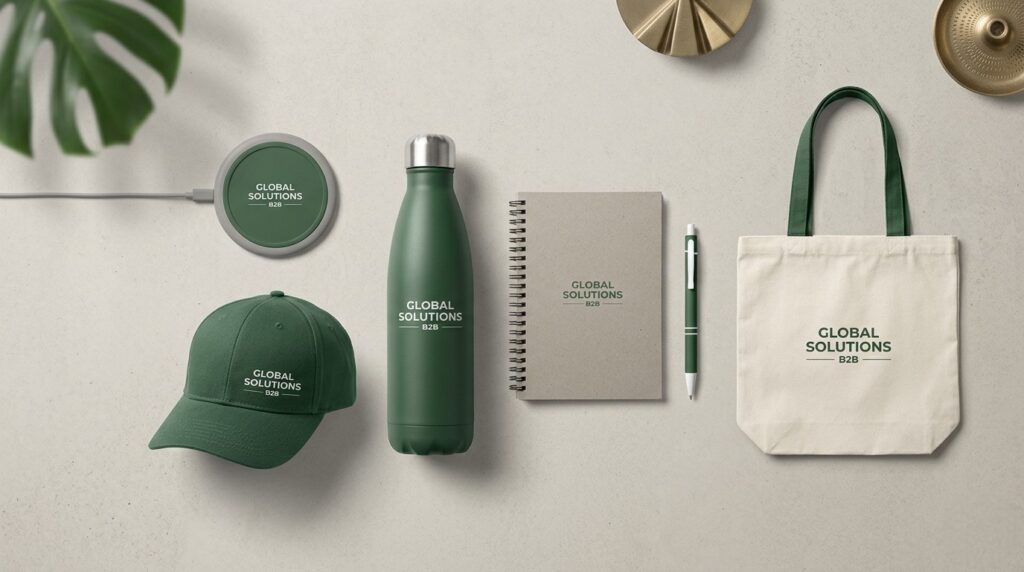
Promotional products span a vast range of categories. Here are the most effective and widely used formats, broken down by category:
Apparel & Wearables (the #1 category globally):
- Branded T-shirts — the single highest-selling promotional product category, generating billions in annual sales
- Caps, bucket hats, and beanies — 56% of recipients keep and wear a promotional hat for at least a year
- Hoodies and outerwear — premium wearables that generate the highest impression count of any category
- Tote bags and branded bags — tote bags are used an average of 57 times per year, delivering 9,365 impressions per unit over their lifetime
Drinkware (the #2 category by volume):
- Branded mugs, steel tumblers, and vacuum insulated bottles — drinkware generates an average of 2,173 impressions per unit over its lifecycle
- Reusable water bottles — enormously popular as brands signal sustainability and wellness values
- Travel mugs and insulated cups — beloved by India’s large commuter workforce
Tech & Digital Accessories:
- USB drives and charging cables — practical, useful, and carried daily
- Power banks and wireless chargers — high-perceived-value items that generate strong brand association
- Wireless earbuds and Bluetooth speakers — the fastest-growing tech promotional category in 2026
- Tech organiser cases — solving a real problem for remote workers and travellers
Writing Instruments & Stationery:
- Custom pens — writing instruments are used an average of 312 times annually, the highest frequency among all promotional item categories
- Branded notebooks and diaries — extremely relevant for India’s large professional and student population
- Sticky note sets and desk organisers — high utility, daily visibility
Eco-Friendly & Sustainable Products (fastest-growing trend in 2026):
- Bamboo stationery and bamboo drinkware — sustainable materials with premium aesthetics
- Seed paper notebooks and plantable products — genuinely sustainable and memorable
- RPET (recycled PET) tote bags — branded sustainability in its most tangible form
- Wheat straw or sugarcane fibre items — eco-friendly alternatives to plastic products
Event & Trade Show Products:
- Lanyards and ID card holders — ubiquitous at every corporate event and exhibition
- Branded umbrellas — enormous logo visibility, high retention during India’s monsoon season
- Cloth carry bags — practical, reusable, and excellent for brand recall
- Stress balls, fidget items, and fun giveaways — high pick-up rate at booths and events
Q6. What promotional products work best for different use cases?
| Use Case | Recommended Products | Why They Work |
|---|---|---|
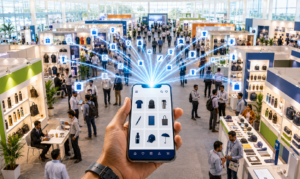
| Trade Shows & Exhibitions | Tote bags, pens, lanyards, power banks | Practical, used immediately, carry logo out of the venue |
| Corporate Events & Conferences | Notebooks, branded mugs, tech accessories | Professional, used in daily work, high retention |
| Employee Welcome Kits | T-shirt, bottle, diary, pen set, desk organiser | Builds belonging and brand pride from day one |
| Festive Gifting (Diwali, etc.) | Premium drinkware, hampers, desk accessories | Emotional occasion = strong brand recall |
| Dealer / Distributor Incentives | Caps, jackets, quality bags, premium stationery | Wearable items reinforce trade loyalty |
| Product Launch Campaigns | Branded pouches, tote bags, product samplers | Creates buzz and sampling association |
| Customer Loyalty Programs | High-quality branded merchandise tied to points | Reinforces repeat purchase behaviour |
| College & Campus Recruitment | T-shirts, caps, eco-friendly totes, stickers | Youth appeal, social sharing potential |
Q7. What are the most popular promotional products in India specifically?
- Diaries and notebooks: India has a strong culture of written note-keeping. Branded diaries are among the most gifted promotional items, especially for Diwali and New Year
- Steel bottles and tumblers: With growing health consciousness and concerns about single-use plastic, branded steel bottles are enormously popular across all demographics
- Umbrellas: India’s monsoon season makes branded umbrellas a guaranteed keeper. Large logo panels ensure maximum brand visibility every time it rains
- Lanyards and ID holders: Essential for India’s vast corporate, educational, and event markets — ordered in large quantities year-round
- Jute and cloth bags: With increasing plastic bag regulations across Indian states, branded jute and cloth bags have surged in demand
- Cotton T-shirts: Popular for employee uniforms, event staff, product launches, and promotional campaigns — India’s warm climate makes lightweight branded tees a year-round staple
- Custom pens: Despite digital penetration, the pen remains India’s most-ordered promotional item by volume — practical, affordable, and universally useful
SECTION 3: CUSTOMISATION, DESIGN & ORDERING — HOW TO GET IT RIGHT
Q8. How are promotional products customised with a brand’s logo?
Customisation is the heart of promotional products — it is what transforms a generic item into a branded marketing tool. The most common printing and branding techniques include:
| Technique | Best For | Finish & Feel |
|---|---|---|
| Screen Printing | T-shirts, tote bags, caps — flat surfaces | Bold, vibrant colours; durable for wash |
| Digital Printing / DTG | Full-colour designs, photographs on apparel | High detail, photographic quality |
| Pad Printing | Pens, USB drives, small hard surfaces | Precise, multi-colour logo on small items |
| Laser Engraving | Metal bottles, pens, keychains, tech items | Premium, permanent, colour-free finish |
| Embossing / Debossing | Leather diaries, notebooks, bags | Tactile, premium feel — no ink |
| Embroidery | Caps, polo shirts, jackets, bags | Premium, durable, 3D texture |
| Sublimation Printing | Mugs, lanyards, polyester apparel | Full-colour, all-over print capability |
| Heat Transfer / Vinyl | Apparel, banners, promotional displays | Sharp edges, metallic and neon options |
At Earth Tribe, we help brands choose the right customisation technique based on the product, material, quantity, budget, and desired finish. We provide pre-production digital proofs for every order so you can review exactly how your logo will appear before production begins.
Q9. What files do I need to provide for logo customisation?
- Vector files (preferred): AI (Adobe Illustrator), EPS, or PDF — these are scalable to any size without losing quality
- High-resolution raster files (acceptable for some techniques): PNG at 300 DPI or higher, TIFF
- Colour codes: Pantone (PMS) colour codes are the industry standard for colour accuracy. Also provide CMYK breakdowns
- Fonts: If your logo uses a custom font, provide the font file or convert text to outlines before sharing
Avoid sharing JPEG, PNG from websites, or low-resolution logos — these result in blurry, pixelated print output that misrepresents your brand.
Q10. What is the minimum order quantity (MOQ) for promotional products?
- Pens and small stationery: MOQ typically 100–500 pieces
- T-shirts and apparel: MOQ typically 50–100 pieces per design/colour
- Mugs and drinkware: MOQ typically 50–100 pieces
- Diaries and notebooks: MOQ typically 50–100 pieces
- Tech accessories (USB drives, power banks): MOQ typically 50–100 pieces
- Premium or fully custom-manufactured items: MOQ may start at 100–500 pieces depending on complexity
Q11. How far in advance should I order promotional products?
- Standard products with simple printing (pens, mugs, basic bags): 7–14 working days
- Apparel with embroidery or multi-colour printing: 10–21 working days
- Custom-manufactured or imported products: 30–60 days
- Large bulk orders (5,000+ units) with multiple SKUs: 3–6 weeks minimum
For major occasions — Diwali, company anniversary, Republic Day events, large trade shows — always plan at least 4–6 weeks ahead. Earth Tribe recommends starting conversations at least 30–45 days before your event for most campaigns.
Q12. How do I design promotional products that people will actually keep and use?
The single biggest mistake brands make is choosing products based on price alone. The most effective promotional products share four qualities — what we call the USDB Framework:
- Useful: The item solves a real problem in the recipient’s daily life. A well-made branded water bottle that someone carries to work every day generates more impressions than 10 cheap plastic keychains
- Stylish: The design must be something the recipient is proud to use publicly. Minimalist branding on a quality product outperforms a giant logo on a cheap item
- Durable: Quality construction ensures the item lasts — and keeps generating impressions — for months or years
- Brand-aligned: The product should reinforce your brand’s personality. A tech company’s promotional item should feel modern and innovative. A wellness brand’s giveaway should feel healthy and conscious
Before finalising any promotional product, ask yourself: “Would I use this myself?” If the honest answer is no, neither will your recipients.
SECTION 4: COSTS, ROI & MEASUREMENT
Q13. How much do promotional products cost in India?
| Product | Price Range (per unit, bulk order) | MOQ |
|---|---|---|
| Branded pens (basic) | Rs 15–50 | 500+ |
| Branded pens (metal, premium) | Rs 80–300 | 100+ |
| Cotton T-shirts (screen print) | Rs 150–400 | 50+ |
| Steel water bottles (with branding) | Rs 200–600 | 50+ |
| Ceramic mugs (with branding) | Rs 80–200 | 100+ |
| Spiral notebook / diary | Rs 100–350 | 50+ |
| USB drives (8–32 GB) | Rs 200–500 | 50+ |
| Power banks (5,000–10,000 mAh) | Rs 400–1,200 | 50+ |
| Jute / cloth tote bags | Rs 80–250 | 100+ |
| Lanyards (sublimation print) | Rs 30–80 | 100+ |
| Branded caps | Rs 120–350 | 50+ |
| Branded umbrellas | Rs 250–700 | 50+ |
| Premium wireless earbuds | Rs 800–2,500 | 25+ |
| Eco-friendly bamboo stationery set | Rs 300–800 | 50+ |
Q14. What is the ROI of promotional products compared to other advertising?
- The ASI 2026 Ad Impressions Study confirms that a Rs 450 branded tote bag generates nearly 9,000 impressions over its lifetime — a CPI of less than half a paisa per impression
- Trade show promotional items generate 5x higher ROI than digital ads in lead generation scenarios
- Brands using promotional products see a 33% increase in customer loyalty scores on average
- 91% of marketers report that promotional products drive measurable sales uplift in their campaigns
- Writing instruments — the most-ordered category — are used 312 times per year on average, meaning a branded pen generates hundreds of brand impressions for the cost of Rs 25–50
Q15. How do I measure the impact of my promotional products campaign?
- QR code tracking: Embed a unique QR code on or with each promotional product that links to a campaign-specific landing page. Every scan is a measurable engagement
- Promo code integration: Include a unique discount or offer code with your promotional product. Track how many codes are redeemed
- Pre and post brand recall surveys: Survey your target audience before and after a campaign to measure changes in brand awareness and recall
- Trade show lead quality analysis: Compare lead quality and conversion rates from events where you distributed promotional products versus those where you did not
- Customer lifetime value tracking: For loyalty programs, track whether recipients have higher repeat purchase rates than non-recipients
- Social listening: Monitor social media mentions, tags, and user-generated content featuring your branded items
SECTION 5: PROMOTIONAL PRODUCT TRENDS IN 2026
Q16. What are the biggest promotional product trends in 2026?
1. Authentic Sustainability — The New Non-Negotiable
Sustainability has crossed from trend to expectation. Consumers and employees in 2026 scrutinise the environmental credentials of the brands they associate with. The most sought-after products are those made from bamboo, organic cotton, recycled PET (RPET), wheat straw, seeded paper, and other responsibly sourced materials. Brands that distribute cheap plastic throwaway items risk negative brand association with environmentally-conscious audiences.
2. Quality Over Quantity — Fewer, Better Items
The era of bulk cheap giveaways is ending. Research consistently shows that recipients keep and value quality items far longer than cheap novelties. Forward-thinking brands are reducing their promotional product quantity and reinvesting the budget into fewer, genuinely premium items that recipients actively choose to use and showcase.
3. Personalisation and Hyper-Relevance
Generic branded merchandise is losing its impact. The most memorable promotional products in 2026 are those personalised to the specific recipient or audience segment — a notebook with the recipient’s name debossed, a wellness kit curated for a specific job role, or an apparel item sized and styled for a particular demographic.
4. Tech-Integrated Merchandise — The Phygital Shift
Promotional products are getting smarter. Items embedding NFC chips, QR code-linked merchandise, and AR-enabled packaging are creating interactive brand experiences that bridge the physical and digital worlds. This transforms a promotional product from a passive brand reminder into an active engagement channel with measurable results.
5. Employee Experience as a Priority
Post-pandemic, organisations across India have dramatically increased investment in employee experience and workplace culture. Promotional merchandise is playing a central role — from well-curated new-joiner kits to anniversary gifts, performance rewards, and festive hampers that reinforce organisational belonging.
Q17. Are eco-friendly promotional products more expensive? Are they worth it?
Eco-friendly promotional products are typically 15–30% more expensive than their conventional equivalents. However, the additional cost is almost universally justified for three reasons:
- Brand perception premium: Sustainable promotional products signal to recipients that your brand is values-driven and forward-thinking — generating stronger brand affinity than equivalent conventional items
- Higher retention: Recipients are more likely to keep and use quality sustainable items (bamboo, organic cotton, recycled materials) because they feel good about using them — multiplying the impressions generated per rupee spent
- Regulatory and CSR alignment: With India’s expanding Extended Producer Responsibility (EPR) regulations and increasing corporate ESG reporting requirements, eco-friendly choices align with compliance and CSR goals
SECTION 6: CHOOSING A PROMOTIONAL PRODUCTS PARTNER IN INDIA
Q18. How do I find a reliable promotional products supplier in India?
- End-to-end capability: Look for a supplier who handles product sourcing, customisation, quality checking, packaging, and delivery
- Design support: A good supplier provides pre-production digital proofs and design assistance so you can visualise the final product before a single unit is produced
- Brand colour accuracy: Ask specifically about their colour management process. Pantone matching and CMYK calibration are essential for brand-accurate output
- Portfolio and references: Ask to see work they have done for brands in your category
- Minimum order flexibility: The right partner works with your actual requirements — not forcing you into quantities that exceed your campaign needs
- Delivery reliability: On-time delivery is non-negotiable for events and campaigns. Ask about typical lead times
- Ethical sourcing: Increasingly important for brands with ESG commitments — confirm that suppliers follow ethical manufacturing practices
Q19. Why choose Earth Tribe for your promotional products in Delhi NCR?
- Complete promotional product range: From classic stationery and drinkware to premium tech accessories and eco-friendly merchandise — we source and customise across all major categories
- Custom packaging and presentation: We offer branded packaging, custom gift boxes, and curated gift kits that elevate your promotional products from a giveaway to a brand moment
- Brand-accurate customisation: Every order goes through pre-production proofing. We match your Pantone colours, respect your brand guidelines, and ensure consistency across large orders
- Pan-India delivery capability: While based in Delhi NCR, we dispatch promotional product orders across India for national campaigns, dealer meets, and multi-city events
- Flexible quantities: We work with campaign-sized orders and large annual contracts with equal care
- Festive campaign expertise: Diwali, New Year, Independence Day, company anniversaries — we have experience delivering time-sensitive festive promotional product campaigns for brands across industries
- Eco-friendly options: We offer a growing range of sustainable promotional products to help brands meet their CSR and ESG commitments
Whether you need 50 premium welcome kits for new employees or 10,000 branded tote bags for a national trade show, Earth Tribe has the sourcing, customisation, and delivery infrastructure to deliver on time and on brand.
QUICK REFERENCE: MOST SEARCHED PROMOTIONAL PRODUCT QUESTIONS ANSWERED
| Question People Search | Short Answer |
|---|---|
| What are promotional products? | Branded physical items distributed to promote a company, product, or event |
| Do promotional products really work? | Yes — 80% of recipients have a more favourable brand impression after receiving one (ASI 2026) |
| What is the most popular promotional item? | T-shirts globally; pens and diaries by volume in India |
| How long do people keep promotional products? | On average 8–16 months; quality wearables kept 12–14 months+ |
| What is the cost per impression of promotional products? | Less than 1/10th of a cent — among the lowest CPI of any advertising format |
| What are eco-friendly promotional products? | Items made from bamboo, RPET, organic cotton, seeded paper, or other sustainable materials |
| What is MOQ for promotional products in India? | Typically 50–500 units depending on product type and customisation |
| How far in advance should I order? | 30–45 days minimum; 6 weeks for large or custom orders |
| What file format for logo customisation? | Vector files: AI, EPS, PDF — for sharp, scalable printing at any size |
| Difference between promotional products and corporate gifts? | Promo products = mass brand awareness; corporate gifts = relationship building with specific people |
| What promotional products work for trade shows? | Tote bags, pens, lanyards, power banks — practical items people use at and after the event |
| Who supplies promotional products in Delhi? | Earth Tribe — Delhi NCR’s promotional products and branded merchandise supplier |
Conclusion
Promotional products are one of the most enduring and effective tools in any brand’s marketing arsenal — not because they are cheap or easy, but because they are physical, personal, and proven. In a world saturated with digital advertising that can be scrolled past, blocked, or forgotten instantly, a well-chosen branded item puts your logo in someone’s hands and keeps it there for months or years.
In 2026, the brands winning with promotional products are those that prioritise quality over quantity, sustainability over novelty, and relevance over random giveaways. They are choosing items their recipients will genuinely use, designing them with care, and distributing them with intent.
At Earth Tribe, we bring that same philosophy to every promotional product order — from a 50-piece new-joiner kit to a 10,000-unit trade show campaign. We would love to help you create promotional products that genuinely represent your brand and generate real results.